Jersey City Multifamily Rent Control Exemption Rules
August 20, 2026
August 20, 2026
On a Wednesday night this past November, the Jersey City Council came within a handful of votes of closing one of the biggest gaps in Chapter 260, the city's rent control ordinance. The measure would have stopped large landlords from splitting bigger portfolios across separate LLCs so that each individual property could still claim the exemption written for small owners. It failed. One council member argued that "stopping institutional investors from masquerading as small landlords by fracturing their portfolios and LLCs is critical," and then watched colleagues vote it down anyway, some because the language had loopholes of its own, some because they weren't convinced it was ready.
That vote matters to anyone buying or selling small multifamily property in Jersey City right now, because it means the exemption line stayed exactly where it's been for decades. And that line, four units versus five, is doing more to shape what a Jersey City multifamily is worth at closing than most sellers realize.
Chapter 260 draws a hard boundary. Any residential building with four or fewer units is completely exempt from rent control, full stop, regardless of when it was built or who owns it. Buildings with five or more units constructed before June 1987 fall under the ordinance's cap, currently the change in the regional Consumer Price Index or 4 percent annually, whichever is lower. The city's own January 2026 CPI figures ran between 3.0 and 3.4 percent, so the 4 percent ceiling wasn't the binding constraint this year, but in a hotter inflation year it would be.
Anything built after June 1987 gets a separate exemption entirely, good for up to 30 years from the certificate of occupancy or the length of the original mortgage, whichever is shorter. That exemption has nothing to do with how many units the building has. A brand new 12-unit building can sit completely outside rent control for decades, while a 60-year-old five-unit walk-up two blocks away is capped at CPI-or-4.
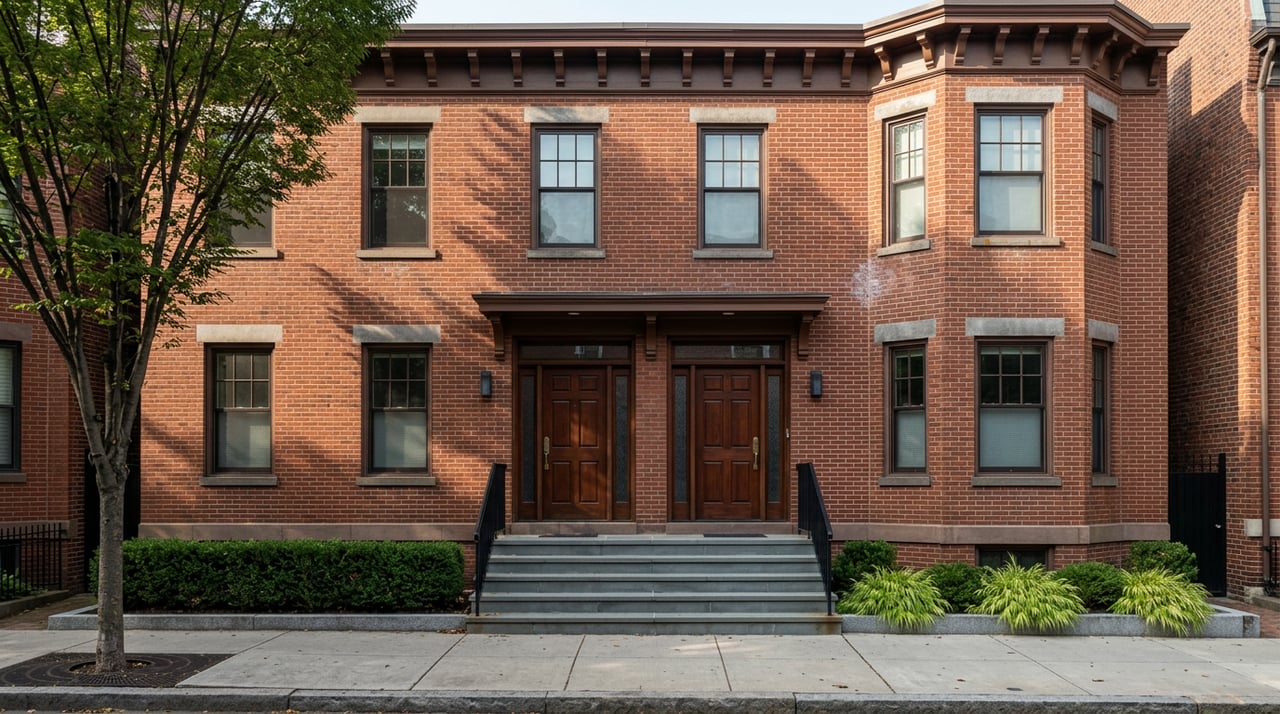
Put those two rules together and you get a housing stock that behaves the way it does for a reason. Jersey City's West Side, Bergen-Lafayette, Journal Square, and the Heights are full of two-, three-, and four-family houses, the exact configurations that fall under the exemption automatically. That isn't an accident of historic construction patterns alone. It's also the shape a rational owner chooses when the difference between four units and five is the difference between total pricing freedom and a permanent CPI ceiling.
Here's where it gets concrete for anyone actually transacting.
A clean four-unit building carries no rent control history to underwrite around. A buyer can reset every unit to market rate at turnover, with no rent leveling board, no base rent calculation tied back to a 1983 reference date, and no exposure to a rollback order if a previous owner miscalculated an increase. Financing and appraisal both treat that building as a straightforward income asset: current rents, market comps, done.
A five-plus unit building built before 1987 is a different underwriting exercise. The buyer inherits the base rent history, the annual registration obligations with the city's Office of Landlord/Tenant Relations, and the CPI-linked ceiling on every future increase. If a tenant successfully challenges a past increase as excessive, a rollback and refund can land on the new owner's books even though the miscalculation happened under the previous one. That risk gets priced, whether or not it's stated explicitly in an offer.
This is precisely the gap the November ordinance was trying to close. As it stands, an owner who wants five units of income can either take on the CPI cap by keeping everything in one five-unit building, or split the same total unit count across two separate four-unit properties, each one individually exempt. The council chamber debate made that trade-off explicit. One resident argued the loophole let large owners disguise themselves as small landlords; the property owners' association pushed back that narrowing it would mostly hurt the small owners it claimed to protect. The measure was defeated on a narrow vote, and no revised version has come back before the council since. Until one does, the incentive to structure ownership around the four-unit line remains fully legal and fully in play.
A second wrinkle catches buyers who assume "new construction" and "no rent control" are the same thing forever. They're not. The 30-year exemption for post-1987 construction is tied to the certificate of occupancy date and the terms of the original financing, and it doesn't reset when the building changes hands. If you buy a ten-year-old five-unit building expecting a fresh 30-year clock, you're mistaken. You inherit whatever is left of the original exemption window, calculated from the original construction event, not from your closing date.
There's a filing requirement buyers should confirm before relying on this at all. State law requires the owner to have filed a written claim of exemption with the municipal construction official at least 30 days before the certificate of occupancy was issued. Courts and rent boards have shown little patience for owners who skipped that filing and tried to claim the exemption retroactively. If you're buying a newer multifamily on the assumption that it's market rate, ask for proof that the pre-CO filing exists. It's a five-minute document check that can prevent a very expensive surprise later.
A few things worth confirming before a small multifamily changes hands in Jersey City:
None of this is legal advice, and the rent control board is the authority on any individual property's status. But knowing which questions to ask before you're under contract is the difference between a clean closing and a renegotiation.
Does a duplex or triplex in Jersey City ever fall under rent control? No. All properties with four or fewer units are exempt regardless of age or ownership structure, a fact the city's own Landlord/Tenant Relations office states plainly on its property inquiry page.
If I buy a rent-controlled five-plus unit building, does the exemption clock reset? No. Both the base rent history and any applicable new-construction exemption period are tied to the original building and financing, not to the sale.
Is the LLC-splitting practice still legal? As of this writing, yes. The ordinance that would have closed that gap for owners of five or more units across multiple properties was defeated in November 2025 on a narrow council vote. No replacement measure has passed since.
If you're weighing a small multifamily purchase or getting ready to list one, the unit count on your deed matters as much as the neighborhood it sits in. Christine Ayubi works with buyers, sellers, and landlords across Jersey City's multifamily stock every week, and can walk you through what a specific building's rent control status means for pricing before you're locked into a number. Let's Connect.
Stay up to date on the latest real estate trends.






Whether buying or selling, Christine provides tailored strategy and dedicated support to help you move with confidence.