Hoboken Sellers: The New Jersey Mansion Tax Isn't a Slope, It's a Cliff
August 13, 2026
August 13, 2026
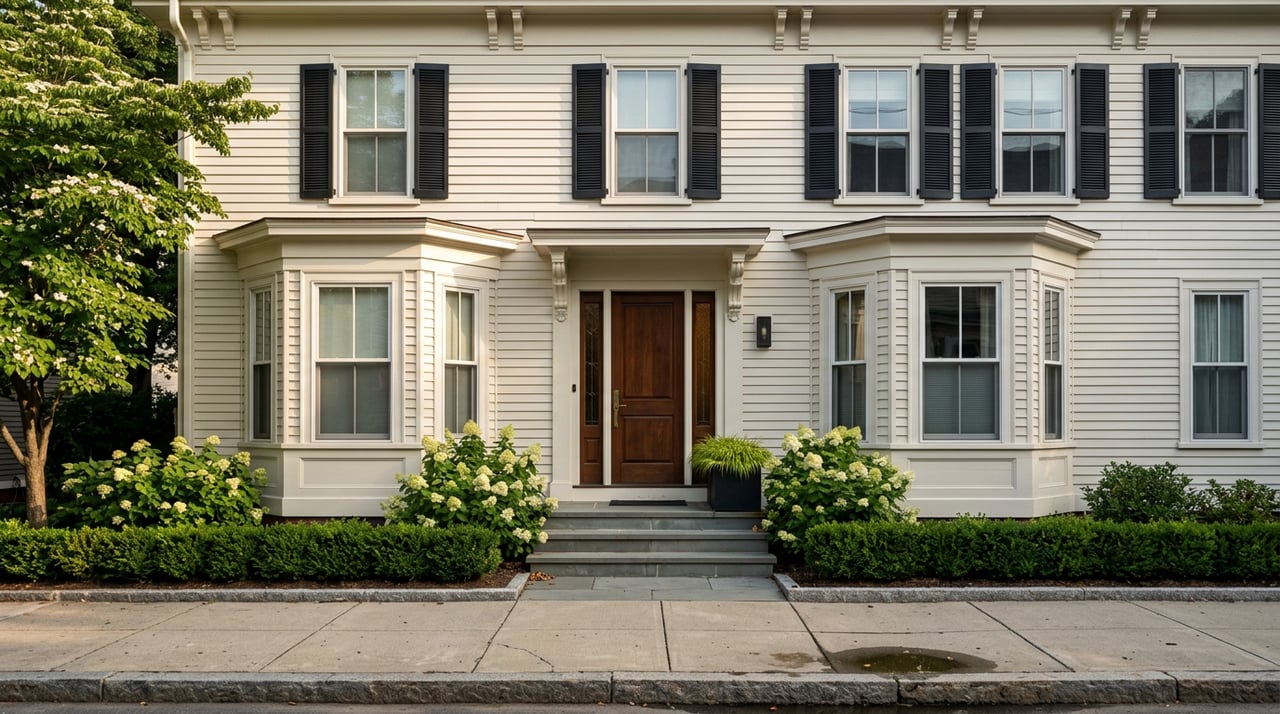
Picture two nearly identical two-bedrooms at the Hudson Tea Buildings, one listed at $2,000,000, the other at $2,020,000. The price gap is a rounding error, less than the cost of a kitchen refresh. The tax gap is not. Under New Jersey's current rules, the seller of the first unit owes $20,000 in transfer tax. The seller of the second owes $40,400, because crossing $2,000,000 by a single dollar moves the entire sale price into a higher bracket, not just the amount above the line.
That is the piece of this story most Hoboken sellers have not fully absorbed. The headline, that New Jersey shifted its so-called mansion tax from buyers to sellers, has been covered everywhere. The part that actually changes how you price a listing is the shape of the tax itself: a series of cliffs, not a gentle slope, sitting at exactly the price points where Hoboken's condo and brownstone market does most of its business.
New Jersey's Realty Transfer Fee has included a supplemental charge on higher-value sales since 2004. For twenty-one years, that charge was a flat 1% on residential sales over $1,000,000, and the buyer wrote the check at closing. Legislation signed by Governor Phil Murphy on June 30, 2025, and effective for deeds recorded on or after July 10, 2025, flipped that arrangement. The fee is now paid by the seller, and above $2,000,000 it climbs in tiers rather than staying fixed at 1%.
A grace period let contracts signed before July 10, 2025 keep the old 1% rate if the deed recorded by November 15, 2025, with sellers eligible for a refund of anything paid above that threshold. That window closed months ago. Every Hoboken closing today falls under the new structure.
Here is the current schedule, confirmed by Cape May County's own summary of the fee:
| Sale Price | Before July 10, 2025 | After July 10, 2025 |
|---|---|---|
| $1,000,000 – $1,999,999 | Buyer pays 1% | Seller pays 1% |
| $2,000,000 – $2,499,999 | Buyer pays 1% | Seller pays 2% |
| $2,500,000 – $2,999,999 | Buyer pays 1% | Seller pays 2.5% |
| $3,000,000 – $3,499,999 | Buyer pays 1% | Seller pays 3% |
| $3,500,000 and up | Buyer pays 1% | Seller pays 3.5% |
The table looks like a normal graduated schedule, the kind income tax brackets use, where only the dollars above a threshold get taxed at the higher rate. It is not that. Multiple legal analyses of the statute, including a July 2025 client alert from Morgan Lewis, confirm the rate applies to the full consideration once a property crosses into a tier, not the marginal amount. That is why the $2,020,000 sale above owes $40,400 instead of something closer to $20,400. The extra $20,000 in price triggered nearly double the tax.
This mechanic creates what tax attorneys have started calling dead zones: narrow price bands just above each threshold where a seller's net proceeds actually fall even as the sale price rises. A property that sells for $2,000,000 nets more after tax than one that sells for $2,020,000, all else equal. For a market like Hoboken's, where waterfront and brownstone inventory regularly lands within a few hundred thousand dollars of these lines, that is not a footnote. It is a pricing decision.
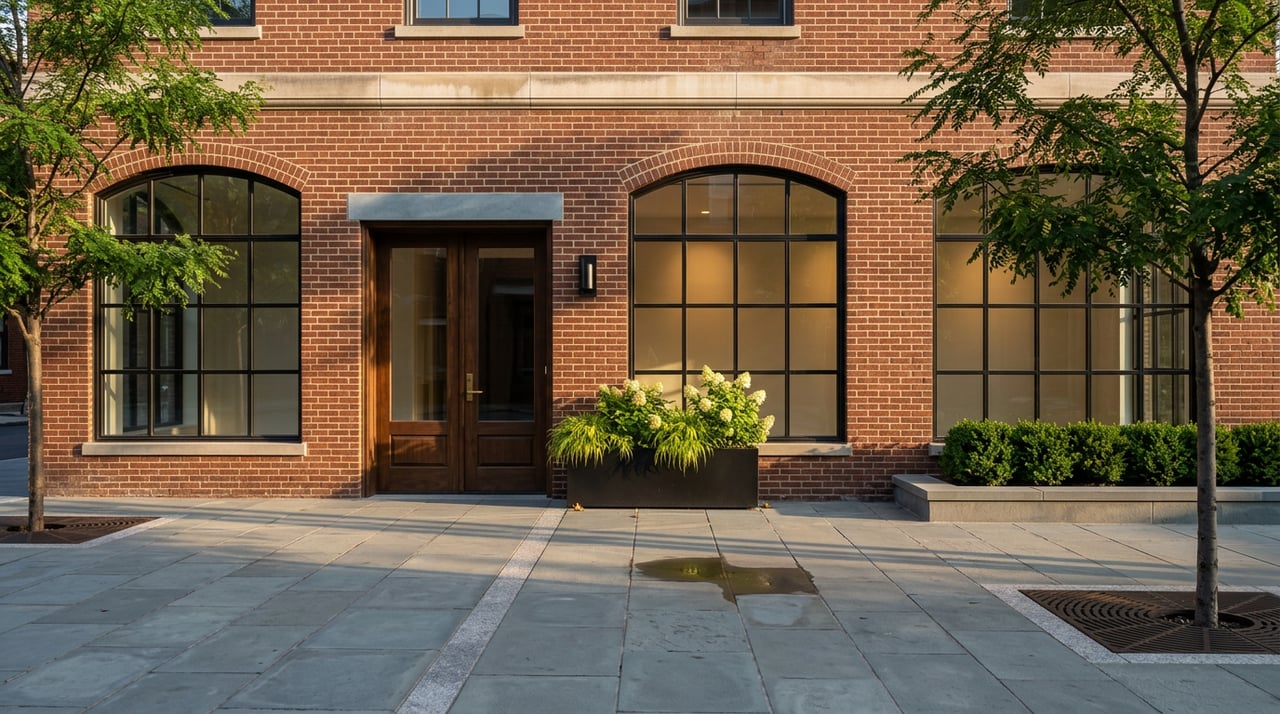
This isn't abstract for Hoboken the way it might be in a town with few sales above $1,000,000. Southend Lofts, the adaptive reuse of the former Davis Baking Powder and My-T-Fine Pudding factory at 38 Jackson Street, prices its one-bedrooms from $795,000, two-bedrooms from $1,250,000, three-bedrooms from $1,850,000, and four- and five-bedroom duplex penthouses from $3,700,000, according to 6sqft's coverage of the project's launch. Run those numbers through the new schedule and the spread is striking. A three-bedroom at $1,850,000 sits comfortably in the 1% tier, roughly $18,500 in tax. A penthouse at $3,700,000 lands above the top threshold at 3.5%, roughly $129,500. Two units in the same building, same address, same amenities package, and the tax bill scales far faster than the price does, because the penthouse crossed two additional cliffs on the way up.
At the top of Hoboken's market, the dollar figures get larger still. The waterfront condo at 1500 Hudson Street, inside the Hudson Tea Buildings, sold for $4,750,000 in April 2026, setting a new city record, as The Real Deal reported. Under the current rule, a sale at that price falls into the top 3.5% tier, meaning the seller's transfer tax obligation runs north of $166,000. The building's previous record, a $4,650,000 sale in 2022, closed under the old regime, when the buyer owed a flat 1%, about $46,500, and the seller owed nothing beyond the standard RTF. Same complex, comparable price, and the party writing the transfer-tax check and the size of that check have both changed dramatically in four years. Even the building's other notable sale, a $3,550,000 unit that a former New York Giants quarterback closed on in 2018, would land in the top tier if it happened today.
Buyers in Hoboken's over-$1,000,000 tier are no longer writing a transfer-tax check at closing. That used to function as informal leverage, a cost buyers factored into their offer. With that line item gone, some brokers report sellers testing higher asking prices to offset their new obligation, and some buyers pushing back precisely because they know the seller is the one absorbing the fee this time. Neither behavior is universal yet, but the incentive structure has flipped, and Hoboken's fast-moving, low-inventory market means both sides adjust quickly.
New Jersey Realtors have continued pressing lawmakers to roll back the increase or at least soften the top rates, arguing it discourages exactly the high-value listings the state wants recorded. That debate has not resolved as of this writing, which means today's schedule is the one governing any Hoboken closing on the calendar, not a placeholder.
None of this is tax or legal advice for your specific transaction, and every seller near one of these lines should walk the exact math through with their closing attorney before setting a number. But the strategic questions are worth asking before a sign goes in the ground:
Where does your realistic sale price sit relative to the nearest threshold, and is there room to price just under a line rather than just over it. A three-bedroom that might otherwise list at $2,050,000 could net more by testing the market at $1,995,000, once the tax difference is worked through. For anyone selling a unit that could plausibly land on either side of $2,000,000, $2,500,000, or $3,500,000, that comparison belongs in the pricing conversation from day one, not discovered at the closing table.
Developers and boutique-building sellers face the same math on a larger scale. A project with several price tiers, penthouses included, should model the after-tax proceeds on each unit type before finalizing a price sheet, since a small adjustment to a penthouse ask can move it across a threshold that costs tens of thousands more than the price increase itself justifies.
Does this apply to co-ops and multifamily, or just condos? The supplemental fee covers Class 2 residential property, which includes single-family and multifamily homes up to four units and condominiums, along with cooperative units and certain farm property with a residential structure. Hoboken's condo stock and its smaller multifamily buildings both fall inside the rule.
What if a buyer's offer happens to land just above a threshold? The rate is set by the consideration recited in the deed at the time it is submitted for recording, so the number in the fully executed contract is what determines the tier. That is exactly why sellers close to a line benefit from discussing pricing strategy with their agent and attorney before accepting an offer, not after.
Could the rates change again? They could. The increase has only been in effect since July 2025, and industry pressure to revisit it has not gone away. Any seller currently under contract or planning to list should confirm the rate schedule in effect at the time of closing rather than assuming today's numbers hold indefinitely.
Pricing a Hoboken property above $1,000,000 now means pricing around a tax structure that rewards precision and punishes round numbers that happen to fall on the wrong side of a line. That is the kind of detail that separates a listing priced with real strategy from one priced by habit.
If you are weighing a sale in Hoboken and want to work through where your number sits relative to these thresholds, Christine Ayubi has spent over a decade pricing luxury resale, new-construction, and rental properties across Hudson County. Let's Connect.
Stay up to date on the latest real estate trends.



Whether buying or selling, Christine provides tailored strategy and dedicated support to help you move with confidence.