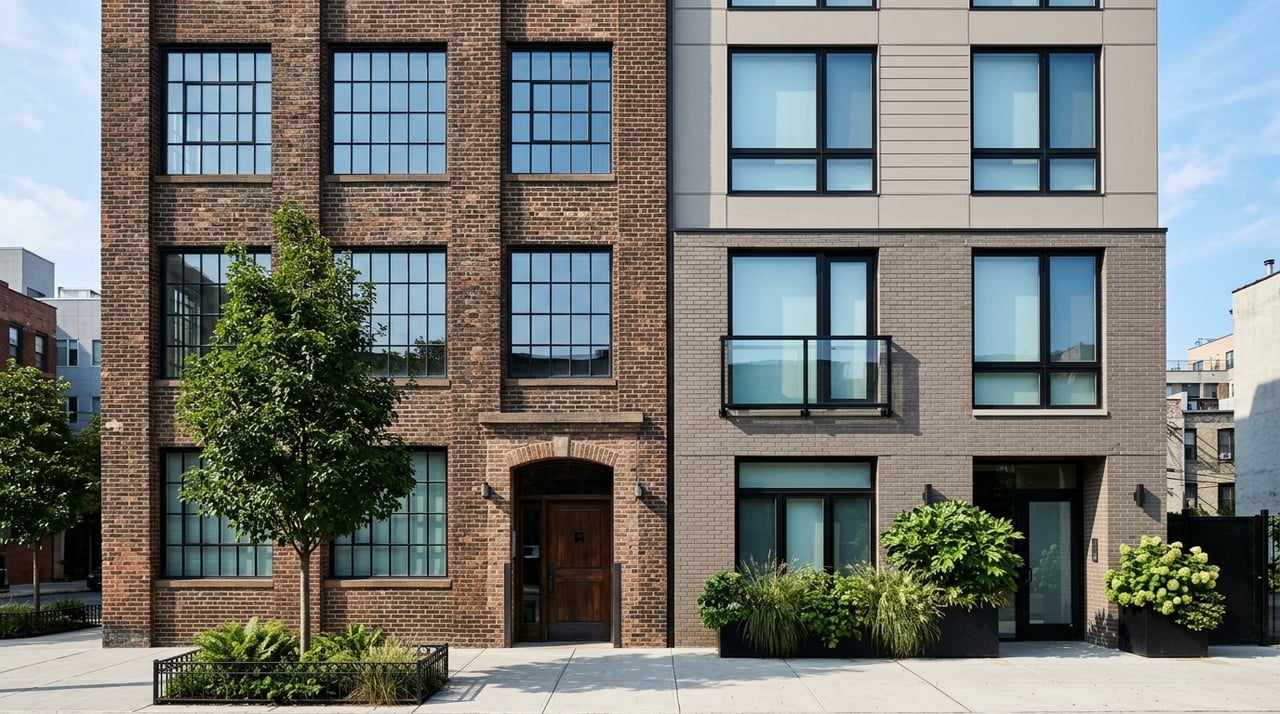
How Bergen-Lafayette Blends Historic Charm With Newer Homes
July 2, 2026
July 2, 2026
If you are trying to understand Bergen-Lafayette, the first thing to know is that it does not fit into one simple box. This Jersey City neighborhood pairs older homes, converted industrial buildings, and newer infill development in a way that feels layered rather than uniform. If you want a clearer picture of what that mix looks like on the ground, this guide will walk you through where the historic charm shows up, where newer homes are emerging, and what that could mean for your search. Let’s dive in.
Bergen-Lafayette is one of Jersey City’s older neighborhoods, and its built environment reflects that history. Local tourism and preservation materials point to a mix of 18th-century homes, historic brownstones, Victorian homes, colonial buildings, old shops, and converted industrial spaces.
That range is a big part of the neighborhood’s appeal. Instead of reading as a single-style district, Bergen-Lafayette feels like an area where different eras of Jersey City are still visible on the same street grid.
Jersey City preservation records also identify the Former Whitlock Cordage Site as an individual landmark and note nearby historic resources in Bergen Hill and Communipaw-Lafayette in Ward F. For buyers, that means the neighborhood’s historic character is not just aesthetic. In some areas, it is part of the city’s documented preservation landscape.
When people think about older housing in Bergen-Lafayette, rowhouses often come to mind first. But the historic side of the neighborhood is broader than that.
You will also find examples of adaptive reuse, where older industrial or institutional buildings were preserved and converted into housing. These projects add another layer to the neighborhood’s housing mix and give buyers more than one path into a home with character.
Whitlock Mills is one of the clearest examples. The New Jersey Housing and Mortgage Finance Agency describes it as the reuse of the historic Whitlock Cordage site, with 330 apartments, including 230 affordable units, while preserving historic buildings from the original complex.
That matters because it shows how Bergen-Lafayette’s older building stock has not only been protected in place. In some cases, it has also been reimagined for modern residential use.
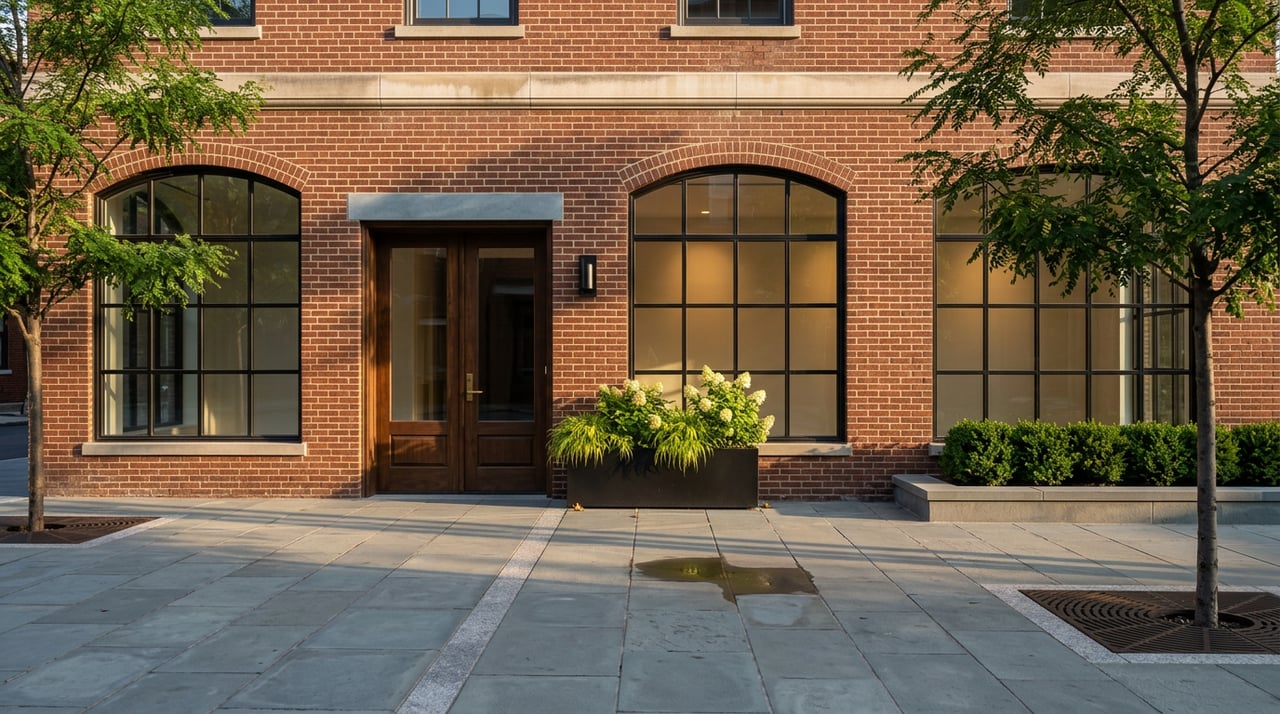
Another adaptive-reuse project is Lafayette House at 328 Pacific Avenue. This former 1860 church was converted into 42 rental units, with restored masonry, original detailing, and lofted penthouses.
For buyers and renters who like architectural character but also want updated interiors, this is a helpful example of the kind of housing product Bergen-Lafayette can offer. The neighborhood’s historic appeal is not limited to untouched older homes. It also includes thoughtfully repurposed buildings.
One of the most important things to understand about Bergen-Lafayette is that newer construction is not spread evenly across the neighborhood. The strongest concentration is within the Morris Canal Redevelopment Plan area, which the city says incorporates amendments published through September 20, 2023.
In practical terms, much of the newer housing is taking shape on former industrial or brownfield parcels. So if you are looking for new-construction options, your search will likely be more successful in specific corridors rather than across every block.
Johnston Avenue stands out as one of the clearest places to see this newer wave of development. Its location near the Liberty State Park Light Rail station helps explain why this corridor has become active for infill projects.
Several recent planning documents illustrate that trend:
If you want a newer condo or mixed-use building near transit, Johnston Avenue is one of the most relevant submarkets to watch.
Another active redevelopment zone sits around Communipaw Avenue, Woodward Street, Summit Avenue, and Grand Street. This area captures the neighborhood’s blend of old and new especially well.
At 417 Communipaw Avenue and 139 Woodward Street, Jersey City planning documents describe an 18-story mixed-use project with 420 dwelling units, 21 affordable units, retail space, a recreation center to be dedicated to the city, publicly accessible open space linking Communipaw Avenue to Berry Lane Park, and adaptive reuse of the Steel Tech head house.
That last detail matters. It shows that some of the neighborhood’s newer projects are not simply replacing older sites with all-new towers. In some cases, they also preserve and reuse parts of the area’s industrial past.
Recent reporting in May 2026 also described a 70-unit, six-story project at 723 Grand Street in the historic Junction. Together, these projects reinforce that the Communipaw and Grand area remains an active corridor for change.
The area near Berry Lane Park and Canal Crossing is another major piece of the story. Here, public investment and residential development are moving together.
The city describes Canal Crossing as a 508-home project with mixed affordability levels, including 102 affordable homes, next to Berry Lane Park. Plans also include a new 33,000-square-foot Garfield Park, an initial extension of the Morris Canal Greenway, and transit-oriented development beside the Garfield Avenue Light Rail stop.
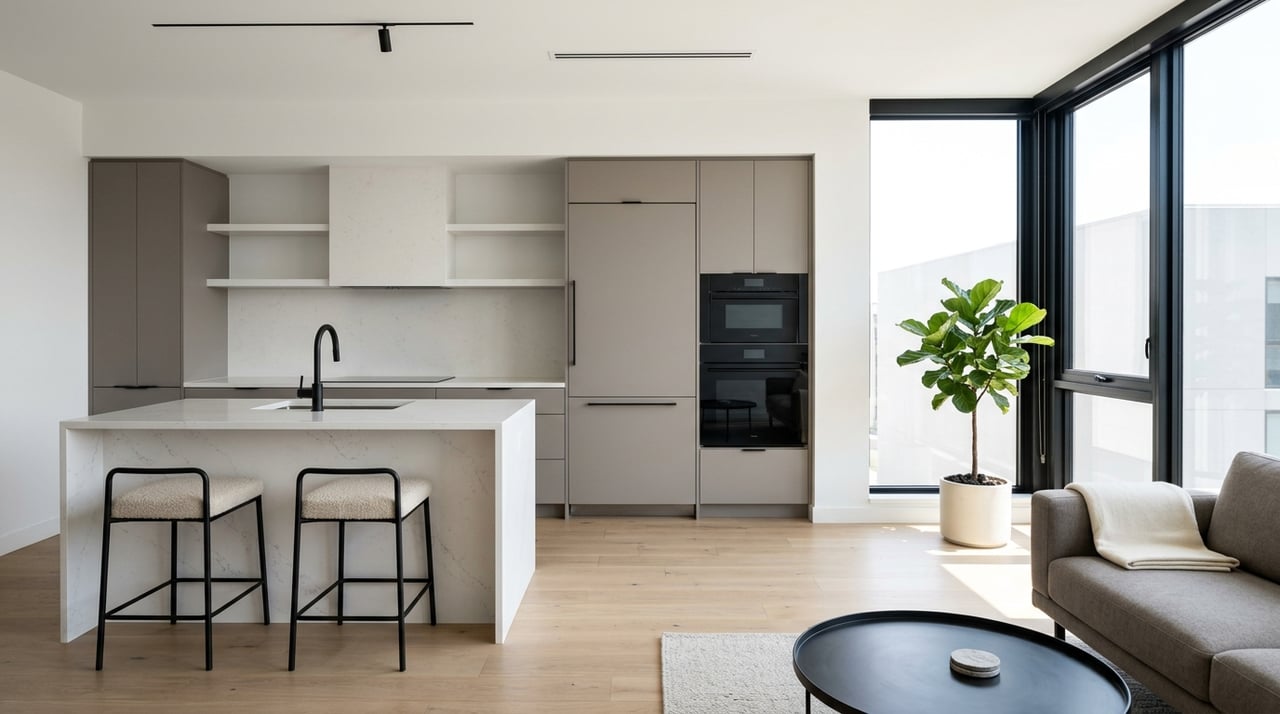
For buyers, that combination can be meaningful. It suggests that some of Bergen-Lafayette’s newer housing is being built alongside parks, walkable streets, and improved neighborhood connections rather than as isolated private development.
Housing style is only part of what makes Bergen-Lafayette attractive. The neighborhood’s transit access and open-space network also shape how it feels to live there.
NJ Transit says the Hudson-Bergen Light Rail connects western Jersey City with Exchange Place, Newport Center, and Hoboken Terminal. In Bergen-Lafayette, the Garfield Avenue station sits between Union and Carteret Streets, while the Liberty State Park station is between Communipaw and Johnston avenues. Both stations offer accessibility features, parking, and bike facilities.
That transit access can make newer and older parts of the neighborhood feel more connected than buyers may expect at first glance. If your priorities include commute flexibility and local mobility, the light rail is a meaningful piece of the value equation.
Liberty State Park is one of the area’s biggest open-space anchors. The state describes it as a green oasis with the CRRNJ Terminal, a two-mile promenade, wide-open fields, and ferry service to Ellis Island and the Statue of Liberty.
Closer to the neighborhood, Berry Lane Park was created from 17 acres of former industrial or brownfield land. Fairmount Park has also been opened and expanded through neighborhood park projects, and the Morris Canal Greenway is intended to improve safer walking and biking connections between neighborhoods.
Taken together, these features help explain why Bergen-Lafayette can feel more residential and livable than some buyers assume based only on redevelopment headlines.
On the ground, Bergen-Lafayette usually reads as a lived-in urban neighborhood with pockets of new activity. Local guide material points to restaurants, cafés, and small businesses along Communipaw Avenue and nearby streets, which supports a neighborhood-scale pattern rather than a single centralized district.
That means your home search may include very different product types within a relatively short distance. Depending on the block and sub-area, you might see:
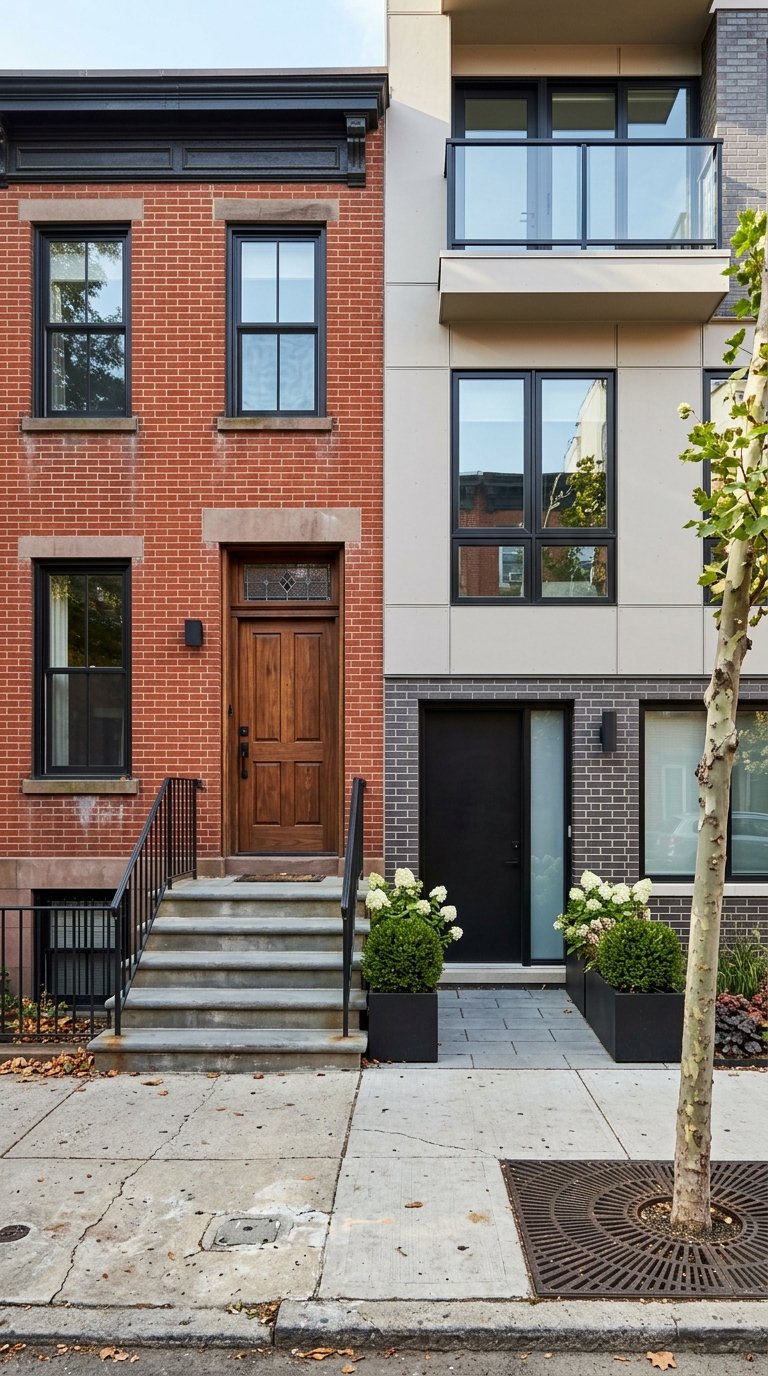
For many buyers, that variety is the draw. You are not choosing between a fully preserved historic district and a fully built-out new-construction zone. You are looking at a neighborhood where both stories are unfolding at once.
If you are drawn to an older property and thinking ahead to renovations, it is smart to check preservation status early. Jersey City’s Historic Preservation Commission reviews exterior work in designated historic districts and landmark properties.
The city also notes that its rules can cover new construction, additions, and demolitions within protected areas. So before planning major exterior changes, you will want to confirm whether the property falls within a designated district or involves a landmarked structure.
Bergen-Lafayette stands out because it offers contrast without feeling disconnected. You can find historic materials, industrial-era architecture, transit access, major parks, and newer residential development in the same broader neighborhood.
For some buyers, that means a chance to find character without giving up convenience. For others, it means access to newer homes in an area that still feels grounded in Jersey City’s older fabric rather than built all at once.
If you are considering Bergen-Lafayette, the most useful approach is to evaluate it corridor by corridor. The neighborhood’s blend of historic charm and newer homes is real, but it shows up differently around Johnston Avenue, Communipaw and Grand, and the Berry Lane Park and Canal Crossing area.
If you want help narrowing down which part of Bergen-Lafayette best fits your style, priorities, and budget, Christine Ayubi can help you make sense of the options with clear, local guidance.
Stay up to date on the latest real estate trends.
Whether buying or selling, Christine provides tailored strategy and dedicated support to help you move with confidence.